
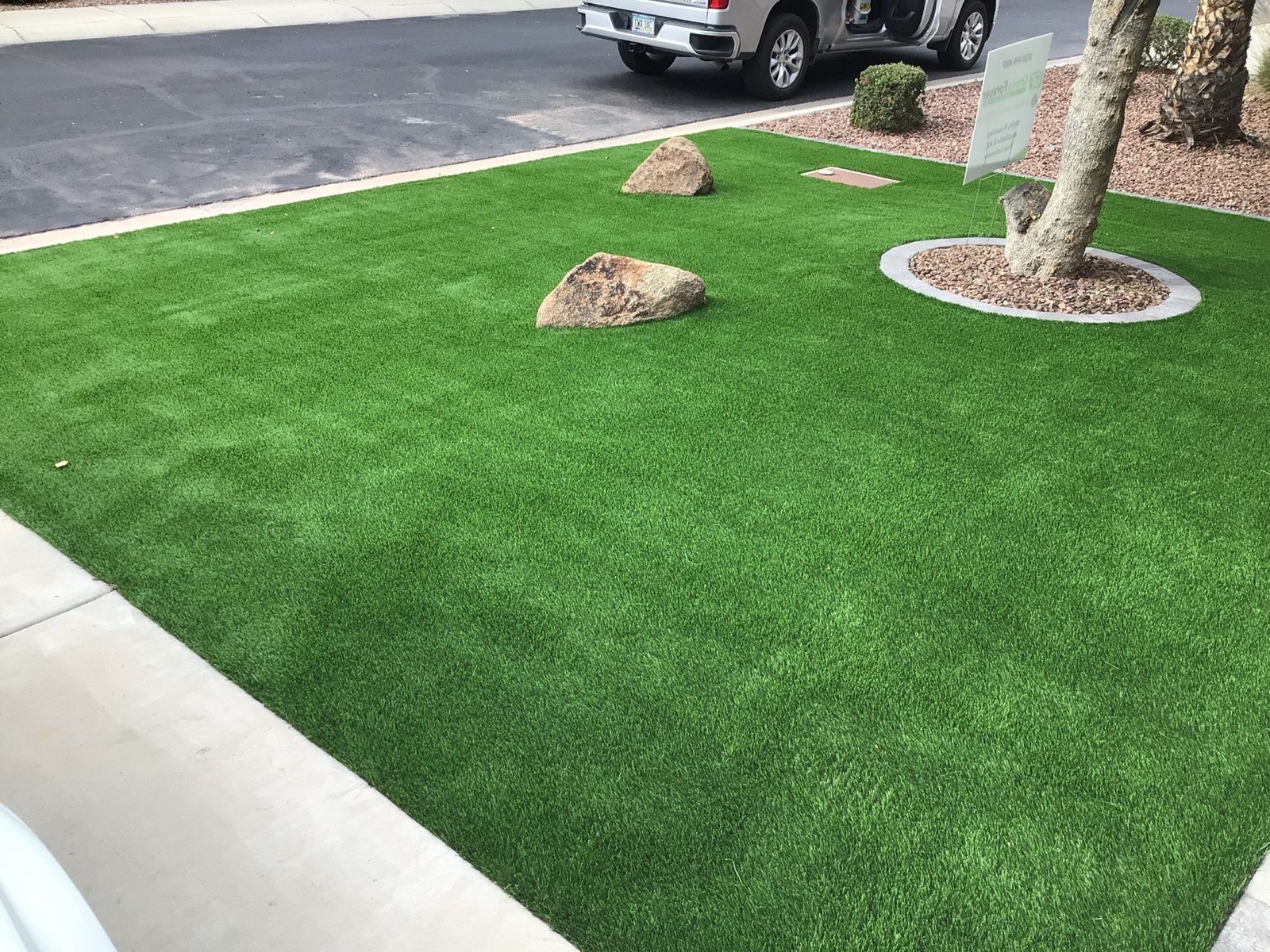
It is the first question almost every Arizona homeowner asks before going turf: "Won't it get blazing hot in the summer sun?" It is a fair concern in a state where surface temperatures climb fast, and you deserve a straight answer instead of a sales pitch. So here it is -- yes, artificial grass warms up in direct sun, just like every other surface in your yard does. But how hot it gets, how long it stays that way, and how comfortable your yard actually feels come down to the quality of the turf and how it is installed. This guide breaks down the real science, the honest trade-offs, and exactly how to keep a turf lawn cool and usable through an Arizona summer.
The Honest Answer: Yes, But So Does Everything Else
Any surface sitting in full Arizona sun gets hot. Concrete, pavers, decomposed granite, natural soil, a wood deck, your car's dashboard -- all of it absorbs heat and radiates it back. Artificial grass is no different, and any company that tells you their turf "stays cool" in 110-degree direct sun is not being honest with you.
The useful comparison is not turf versus a magical cool surface that does not exist -- it is turf versus the other things you would actually put in your yard. In direct afternoon sun, quality artificial grass typically runs warmer than a shaded natural lawn but in the same range as concrete and cooler than dark pavers or rock. The good news that rarely gets mentioned: turf sheds that heat almost instantly. The moment the sun moves off it or you give it a quick rinse, it cools back down fast -- something concrete and pavers cannot do.
Why Some Turf Gets Hotter Than Others
This is where the quality of your lawn matters more than anything, and it is exactly why the cheapest quote so often becomes the hottest, most disappointing yard. Several factors decide how warm a turf surface gets:
1. Turf Quality and Backing
Premium turf is engineered with heat in mind. Better yarns, lighter and more natural color blends, and modern backing systems are designed to reflect more sunlight and hold less heat. Bargain turf -- thin, dark, and cheaply made -- absorbs more heat, holds it longer, and breaks down faster under UV. The lawn that costs the least up front is almost always the one that bakes hardest and looks worn within a couple of summers.
2. Infill
Infill is the granular material brushed down into the turf fibers, and it does far more than keep blades standing up. The right infill helps the system drain, stay stable, and manage surface temperature. There are even specialty cooling infills that hold a small amount of moisture and release it to lower surface temps. Skimp on infill -- another classic corner cut on cheap installs -- and the lawn runs hotter and wears out sooner.
3. Sun Exposure and Shade
A lawn in full, all-day western sun will always be warmer than one that gets afternoon shade from a patio cover, tree, or the house itself. How your yard is oriented and shaded has a huge effect on how the turf feels underfoot.
4. Color and Pile
Lighter, multi-tone turf with a realistic thatch layer reflects more light than dark, flat, single-color budget grass. The most natural-looking premium turf also tends to be the coolest -- a rare case where the better-looking option is also the better-performing one.
How to Keep Your Artificial Grass Cool
Here is the part that actually matters: a well-chosen, well-installed turf yard is comfortable to use all summer when you plan for heat from the start. The proven ways to keep it cool:
- Add shade where you spend time. This is the single biggest lever. A SunGuard Shade Solutions patio cover or strategically placed shade over your main turf zone keeps that area dramatically cooler and usable even at midday. We go deep on this in our guide to cooling your yard with turf and patio covers together.
- Give it a quick rinse. A 30-second spray with the hose drops surface temperature almost immediately. Unlike watering a real lawn, this is occasional and optional -- just a quick cool-down before the kids or dog head out at the hottest part of the day.
- Choose premium, lighter-colored turf. The right product runs cooler from day one. This is a decision you make once, at install, and live with for 15-plus years.
- Use a quality, heat-smart infill. Proper infill -- including cooling options -- helps manage surface temperature and keeps the system performing.
- Design for your sun. A good installer reads your yard's exposure and helps you place turf, pavers, and shade so the spaces you use most stay the most comfortable.
What About Pets and Kids?
This is the real concern behind the question, and it is a reasonable one. Just like you would not let a dog stand on hot pavement or a child run barefoot across a sunbaked patio at 3 p.m., common sense applies to any surface in summer. The difference with turf is how easy it is to manage: a quick rinse cools it on demand, and a shaded turf zone stays comfortable through the day. Many of our clients with pets and young kids specifically design a covered, shaded turf area exactly so there is always a cool, clean, mud-free spot to play. Pet-friendly turf systems also add enhanced drainage and antimicrobial infill, so the shaded play zone stays cool, clean, and odor-free.
Turf vs. the Alternatives in the Heat
It is worth remembering what the alternatives actually look like in an Arizona summer. A natural lawn stays cooler only while it is alive -- and keeping Bermuda green through July means hundreds of gallons of water a day, constant mowing, and a bill that never stops. Let it go dry and you are left with hot, patchy dirt. Concrete and dark pavers absorb and hold heat for hours after the sun moves on. Rock and gravel radiate heat well into the evening.
Quality turf, by contrast, gives you a green, soft, usable surface that cools the moment you shade or rinse it -- with none of the water, mowing, or reseeding. When you compare it honestly to the real options, a well-installed turf yard is one of the most practical surfaces you can have in the desert, not the least.
Why the Cheapest Turf Is the Hottest Turf
If there is one thing to take away, it is this: heat performance is one more reason the lowest quote is usually the most expensive decision. Thin, dark, cheaply made turf with skimped infill absorbs more heat, holds it longer, fades and mats under UV, and needs replacing in a few short years. Premium turf -- lighter, denser, properly infilled, and installed over a correct base -- runs cooler, looks natural, and holds up through more than a decade of Arizona summers. Green Forever Arizona installs premium, heat-conscious turf backed by a 16-year materials warranty (ROC #324435), so the cool, comfortable lawn you pay for is the lawn you keep.
See Your Cooler Yard Before You Commit
The honest answer to "does artificial grass get hot in Arizona" is yes, it warms in the sun like everything else -- but with quality turf, smart shade, and a quick rinse, a turf yard is comfortable and usable all summer long, with none of the water bills or upkeep of a natural lawn. The best next step is to see it for yourself. Try our free AI visualizer to preview your own transformed yard -- turf, pavers, and patio cover shade included -- and when you are ready, we will measure your space and give you an exact, no-pressure price. Curious what that investment looks like? Our 2026 Arizona turf price guide breaks it down.