
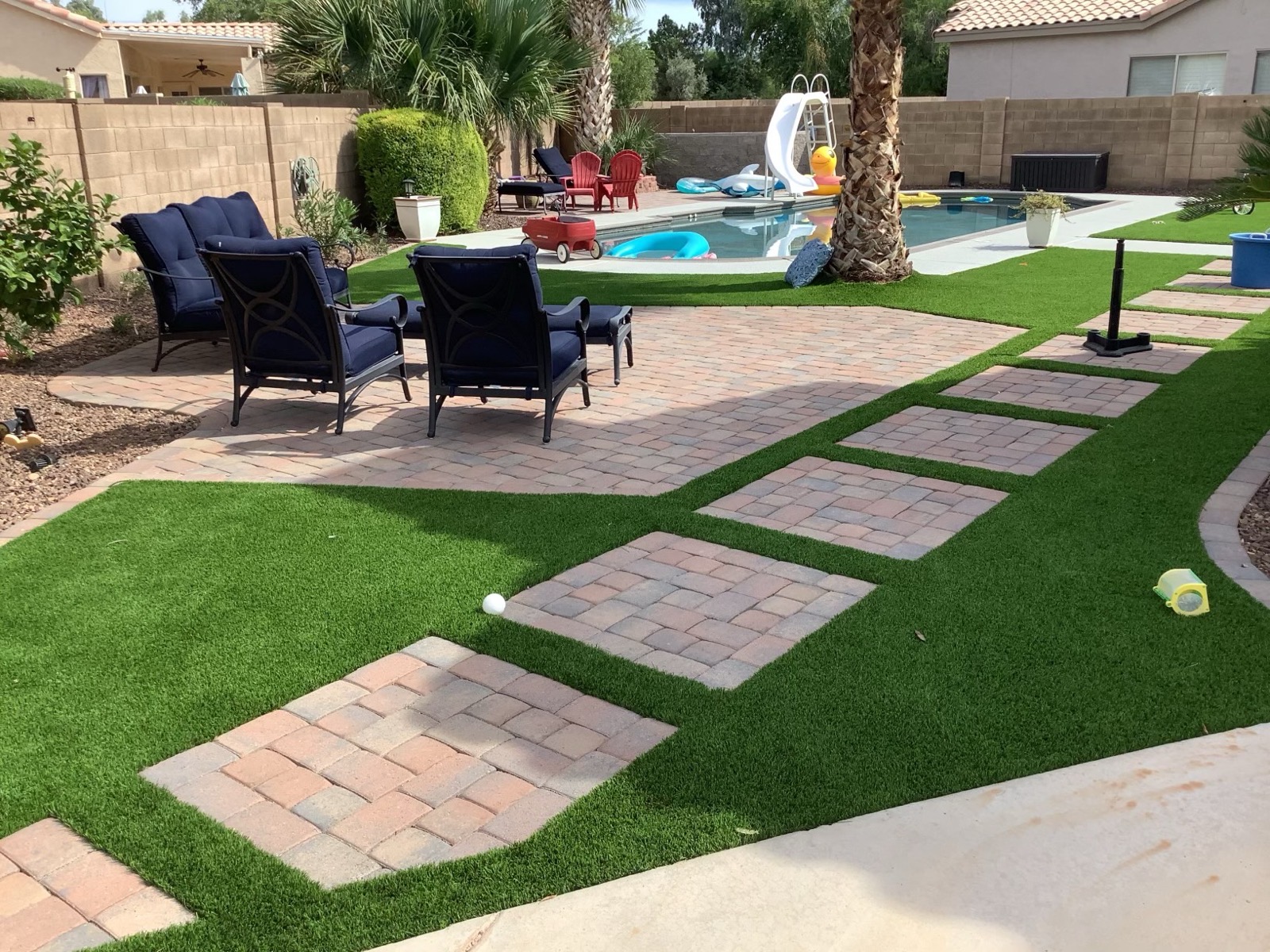
Does artificial turf increase home value? In the Phoenix area, a quality turf lawn usually makes a home easier to sell and more attractive to buyers, but it rarely shows up as its own dollar line on an appraisal. The value is real -- it just shows up in listing photos, showings, and offers more than in a spreadsheet.
That distinction matters, because it changes how you should think about the investment. Turf is not a granite countertop with a tidy resale number attached. It is the difference between a yard that makes buyers lean in and a yard that makes them start mentally subtracting money from their offer.
The Short Answer
A professionally installed artificial lawn generally helps resale in Arizona by improving curb appeal, removing a water and maintenance burden buyers do not want, and making the yard look finished year-round. A poorly installed lawn -- visible seams, flat fibers, lifting edges, or odor -- can hurt value, because buyers see it as something they will have to tear out.
In other words, turf does not add value automatically. Good turf does. Here is how that plays out with real Valley buyers and appraisers.
Does Artificial Turf Increase Home Value or Decrease It?
It can do either, and the deciding factor is almost always the quality of the install, not the idea of turf itself.
Think about what a buyer in Mesa, Chandler, or Scottsdale is comparing your yard against. In much of the Valley, the alternatives are a natural lawn that is either brown and patchy from June to September or green because someone is paying a serious water bill, or a gravel yard that reads as unfinished. A clean, natural-looking turf lawn beats both in a listing photo, and it beats both again when the buyer realizes they will not inherit a mowing schedule, an overseeding routine, or a summer irrigation habit.
Here is where turf tends to increase a home's appeal and marketability:
- Listing photos. Most buyers see your yard online first. A green, even lawn photographs well in July just as it does in January.
- Low maintenance as a selling point. Retirees, snowbirds, busy families, and second-home buyers in the Valley actively look for yards that do not need weekly care.
- Water savings. Buyers are paying more attention to water use than ever, and a yard that does not need summer watering is an easy story to tell.
- Usable space. Kids, dogs, and backyard games all work on turf. A yard that looks like it can be lived in helps a family picture themselves there.
And here is where turf decreases value: when it looks fake, wrinkles, smells, or is obviously near the end of its life. At that point it becomes a removal-and-replacement cost in the buyer's head, and buyers almost always overestimate those costs when they negotiate.
What Do Phoenix-Area Buyers and Appraisers Actually Look At?
Buyers and appraisers look at the yard differently, and it helps to know both.
What appraisers look at
Appraisers lean heavily on comparable sales, square footage, condition, and major features like pools. Landscaping is usually folded into overall condition and curb appeal rather than priced as a separate item. That is why you will not find an honest source that promises turf adds a specific dollar amount or percentage to an appraisal -- and why you should be skeptical of anyone who does.
What a quality lawn does is support the "well-maintained" condition rating and keep the exterior from dragging the overall impression down.
What buyers look at
Buyers are much more emotional and much more visual. In showings around the Valley, here is what they notice:
- Does it look real? Multi-tone blades, a natural sheen instead of a plastic shine, and a realistic pile height.
- Are there seams? Visible lines or color shifts between rolls are the most common giveaway of a rushed install.
- Is the surface flat and even? Dips, humps, and wrinkles mean the base was not graded and compacted properly.
- How are the edges? Clean edges against pavers, curbs, and planters look finished. Edges curling up along a fence look neglected.
- Does it smell? Especially in a dog household, buyers will notice odor on a hot day before they notice anything else.
- How old is it? Buyers and inspectors may ask. A recent install with a transferable materials warranty is a nice thing to hand them.
When Can Turf Hurt Resale (Cheap Install, Bad Seams, Odor)?
Almost every turf lawn that hurts a home's value traces back to the same place: a bid that was too cheap to be built correctly.
The problems buyers notice are rarely about the turf fiber. They come from what was skipped underneath and around it:
- Thin or poorly compacted base. A proper base is several inches of quarter minus aggregate, compacted in lifts and graded to drain. Skip that, and the lawn develops dips, ripples, and puddles within a couple of summers.
- Rushed seams. Seaming takes time and experience. Rush it and the seams show from the street.
- Not enough infill. Under-filled turf goes flat fast, looks matted, and holds moisture. It is invisible on install day and obvious by year two.
- Budget product. Low face weight and cheap backing fade, shine, and drain poorly in Arizona sun. That plastic look is exactly what buyers mean when they say "fake grass."
- Odor. In pet yards, odor almost always comes from urine sitting on a base that does not drain. Our guide on whether artificial grass smells with dogs walks through why it happens and how a properly built lawn avoids it.
This is why the cheapest quote is the real red flag. A bid far below the others is not a discount -- it is base depth, infill, product quality, and crew time that never made it into your yard. And when you sell, the buyer finds out.
At Green Forever Arizona, we build every lawn to the standard we would want to hand a buyer: a quarter minus base compacted in lifts, U.S.-sourced turf, the full infill rate, and crews who have been with us since day one. We are a licensed Arizona contractor (ROC #324435), and our turf carries a 16-year materials warranty plus a 2-year labor warranty. As a planning figure, quality turf installed properly runs about $15 per square foot in the Valley -- real pricing depends on access, demolition, drainage, and layout. For how long a well-built lawn holds its looks, see how long artificial grass lasts in Arizona.
Front Yard vs Backyard: Where Turf Matters Most for Curb Appeal
If your main goal is resale, the front yard is where turf does the most work. It is the first thing buyers see in the listing photo, the first thing they see when they pull up for a showing, and it sets their expectations before they walk through the front door.
A few things that make a front yard lawn read as an upgrade instead of a shortcut:
- Keep the lawn proportional. A turf panel framed by decorative rock (about $3.50 per square foot as a planning figure) and desert plants looks intentional and fits Arizona architecture. Wall-to-wall green can look out of place on some streets.
- Define the edges. A paver border at about $12 per linear foot gives the lawn a crisp finished edge and keeps rock and dirt off the turf.
- Check with your HOA first. Many Valley HOAs commonly require architectural review for front yard landscaping changes, so get approval before work starts.
The backyard matters more for how buyers picture living in the home. Turf there pairs well with a paver patio, shade, and room for kids or dogs to play. A SunGuard Shade Solutions patio cover over the main seating area makes that backyard usable in the afternoon, which is something Phoenix buyers notice immediately. For a deeper comparison, see our guide on front yard vs backyard turf.
See What It Would Look Like on Your Home
Not sure how turf would look on your own front yard? Upload a photo to our free AI visualizer and preview it on your actual property in seconds. When you are ready, schedule a free consultation and we will walk the yard, check the grade and drainage, and give you a real number.
FAQ
Do appraisers count artificial turf?
Not usually as a separate line item. Appraisers fold landscaping into overall condition and curb appeal, so a quality lawn supports a strong condition rating while a worn-out one can drag the exterior impression down.
Does fake grass lower property value?
Cheap or worn-out fake grass can, because buyers see a removal and replacement cost. A natural-looking, well-drained, properly seamed lawn generally does the opposite and makes the home easier to market.
Do buyers in Phoenix like artificial turf?
Many do, especially buyers who want low maintenance and lower water use. What they do not like is turf that looks plastic, has visible seams, or smells, so the quality of the install matters as much as the decision to install it.
Is artificial turf worth it if I plan to sell soon?
It can be, particularly for the front yard, where curb appeal and listing photos matter most. Just make sure it is built correctly -- a rushed, low-bid install right before listing can do more harm than a plain gravel yard.
Does the turf warranty transfer to a new owner?
Warranty terms vary by manufacturer and contractor, so ask for the details in writing before you install. Either way, keeping your install paperwork and warranty documents on hand gives buyers useful information about the lawn's age and quality.