
Why Regular Pet Turf Cleaning Matters
Your synthetic turf lawn provides the perfect play surface for your dog, but keeping it fresh requires consistent maintenance. Without proper care, pet waste and urine can create unpleasant odors and allow harmful bacteria to accumulate on the surface. Studies show that unwashed pet turf can harbor over 100,000 bacteria per square inch, making regular cleaning essential for your family's health.
Pet turf cleaning isn't difficult when you establish simple routines. The good news is that quality artificial grass designed for pets handles waste better than natural grass ever could. Modern synthetic grass features antimicrobial infill and superior drainage systems that prevent standing water and reduce bacterial growth.
Arizona's hot climate actually helps your cleaning efforts. The intense sun naturally sanitizes grass blades between cleanings, while proper drainage systems allow quick drying after you rinse the affected area.
Essential Tools for Pet Turf Cleaning
Having the right tools makes pet turf maintenance quick and effective. Start with these basic supplies for routine care:
- Pooper scooper or plastic bags for solid waste pickup
- Garden hose with spray nozzle for regular rinsing
- Soft-bristle brush or broom for brushing turf fibers
- Enzyme cleaner specifically formulated for artificial grass
- Mild soap or turf deodorizer for spot cleaning
- Leaf blower or rake for removing fallen leaves and debris
For deeper cleaning sessions, consider these additional tools:
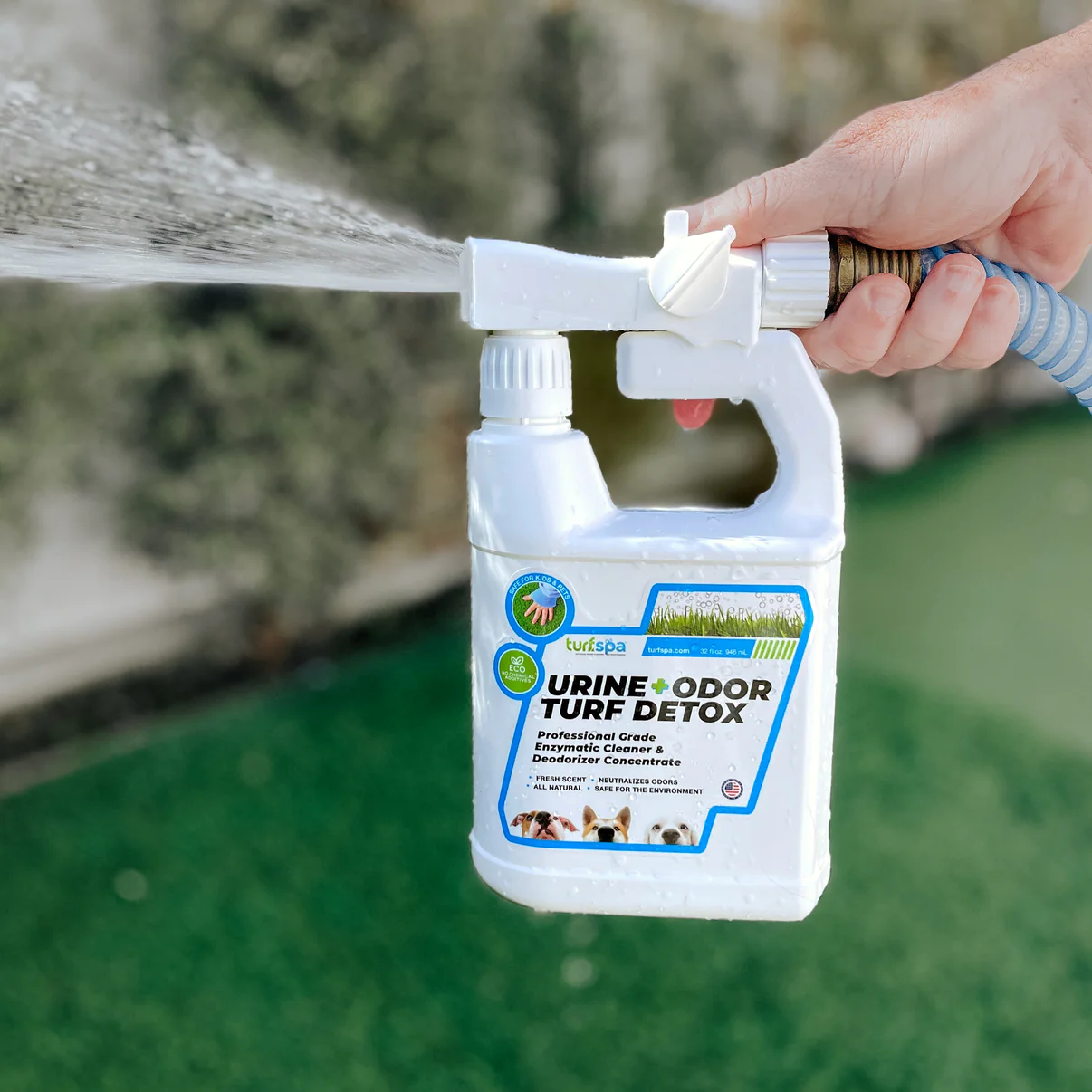
- Hose end sprayer for applying cleaning solutions evenly
- Stiff brush for scrubbing stubborn stains
- Wet/dry vacuum for removing excess water
- Turf rake designed to prevent matting
Avoid harsh chemicals like bleach or ammonia that damage artificial grass fibers and break down the turf backing. Stick with pet turf safe cleaners that won't harm your synthetic grass or your pets.
Daily and Weekly Maintenance Routine
Daily Pet Turf Care
Remove solid pet waste immediately using your pooper scooper. Dog poop left on synthetic grass attracts flies and creates odor problems within hours, especially in Arizona heat. Pick up waste at least once daily, or more often if you have multiple pets.
Spray high-traffic areas and favorite bathroom spots with your garden hose each evening. This light rinse flushes away pet urine before it can create odor buildup. The quick spray takes less than five minutes and prevents most odor issues.
Weekly Deep Maintenance
Brush your synthetic turf lawn with a stiff broom or turf rake to lift grass blades and prevent matting. This brushing redistributes infill material and keeps artificial grass fibers standing upright.
Rinse the entire synthetic grass surface thoroughly with your garden hose. Apply an enzyme cleaner to problem areas where odors persist. Let the cleaner soak for 15-20 minutes before rinsing clean.
Tackling Pet Urine and Odors
Dog urine presents the biggest challenge for keeping synthetic turf fresh. The secret to managing urine is dilution and neutralization. Immediately after your dog urinates, spray the spot with water from your garden hose.
Pro Tip: Mix equal parts water and white vinegar in a spray bottle for a cheap, effective DIY solution that neutralizes pet urine odor. Apply after your water rinse, let sit for five minutes, then rinse again with plain water.
For persistent odor problems, enzyme cleaners deliver superior results. These products contain enzymes that break down organic waste, eliminating odors at a molecular level.
Deep Cleaning Your Pet Turf
Monthly deep cleaning keeps your synthetic turf lawn in peak condition and extends its life. Choose a mild, sunny day for your deep clean. Apply an enzyme cleaner across the whole yard using a hose end sprayer for even coverage. Let the solution soak for 20-30 minutes, then rinse thoroughly.
For heavily soiled areas, mix warm water with mild soap designed for artificial grass and scrub with a stiff-bristled brush in circular motions.
Preventing Common Pet Turf Problems
- Train your dog to use specific bathroom areas to concentrate cleaning efforts.
- Rinse immediately after your dog urinates -- this single habit prevents 90% of odor problems.
- Remove debris regularly to prevent matting.
- Brush turf fibers monthly to maintain proper drainage.
- Inspect for standing water after monsoon rains.
- Apply beneficial bacteria treatments during summer months.
Professional Cleaning Solutions
While DIY pet turf cleaning handles routine maintenance, professional services deliver deeper cleaning and specialized treatments. Green Forever Arizona offers comprehensive turf cleaning and maintenance services designed specifically for pet owners using TurfSpa professional-grade products with advanced enzyme technology.