
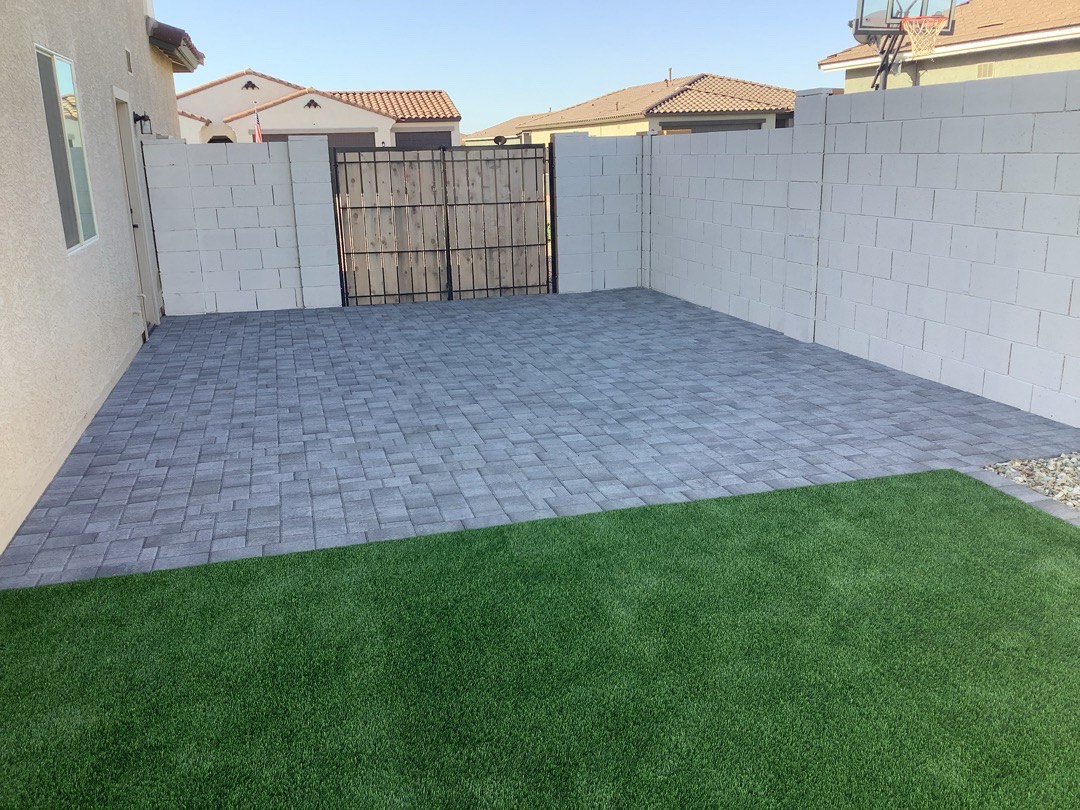
This question lands in our inbox constantly, usually phrased with a little apology attached: "Is it too late in the year?" or "Should we wait until it cools off?" Homeowners ask it because they have spent their whole lives around real grass, and real grass has rules about when you can plant it.
Artificial turf does not. That single fact changes the entire conversation, and most of what you will read online about turf installation timing is quietly borrowed from sod-laying advice that does not apply.
The Short Answer
Every month of the year is a legitimate month to install artificial turf in Phoenix. What changes season to season is not the quality of the lawn -- it is how long you wait for a crew, and how much of the year you get to enjoy it afterward.
Sod has to root. Seed has to germinate. Both are living things that fail if you put them down at the wrong time, which is why natural grass has a genuine planting window in the Valley. Turf is manufactured fiber on a compacted aggregate base. There is nothing to establish, nothing to water in, nothing that can fail to take. The day our crew rolls it out and pulls the last seam tight, it is finished -- in February, in July, in October.
So the honest answer to "when should we install" is a scheduling answer, not an agronomy one. Here is how each season actually plays out.
Spring and Fall: Everyone Else Is Calling Too
March through May and late September through November are the busiest months in Arizona outdoor living, and it is not mysterious. The weather is spectacular, people are outside noticing their yards for the first time in months, and everyone decides simultaneously that this is the year they fix it.
What that means for you practically:
- Lead times stretch. The calendar fills weeks out, and the specific week you wanted is often already spoken for.
- Materials move fast. If you want a particular turf in a particular face weight, spring is when availability gets tight industry-wide.
- Every landscaping contractor in the Valley is stacked, which changes how some of them behave -- more on that below, because it matters more than the wait.
None of this is a reason to avoid spring or fall. These are wonderful months to install, and plenty of our best projects go in during them. It simply means calling early is the difference between getting your date and getting whatever is left.
Summer: The Shortest Wait, and a Workflow Advantage
Summer is the season homeowners assume is off-limits, and it is the one we would most encourage you to reconsider.
Nobody is thinking about their backyard in July, which means the schedule opens up and you can often get on the calendar in a fraction of the usual time. But there is a genuine installation reason to like summer heat too: turf arrives rolled, and rolled material wants to relax before it gets seamed and stretched. Heat helps it lie flat and release memory faster, which makes for clean, tight seams. Our crews have installed through every Phoenix summer we have been in business. They start early, they hydrate, they know the material -- and the finished lawn is indistinguishable from a January install.
The other summer argument is simply arithmetic. Install in July and you own a finished, usable yard for the entire fall, the entire winter, and the whole following spring. Wait until October and you have spent one more full summer looking at dirt, dead Bermuda, or a lawn you are irrigating at peak water rates.
If summer heat on the surface is your actual concern rather than the install itself, that is a fair question with a real answer -- we cover it honestly in our guide to whether artificial grass gets hot in Arizona, including the infill and shade choices that make the biggest difference.
Winter: Quietly the Easiest Season of All
December through February is the Valley's secret. The ground excavates and compacts beautifully, crews work comfortably all day without heat breaks, and the schedule is calmer than spring.
There is also a timing argument most people miss. Turf installed in January is finished and settled well before the first hot weekend, which means you walk into spring with the project already behind you instead of in the middle of it. Holiday gatherings, spring break, Easter in the backyard -- the lawn is simply there and done. And you walk away from the overseeding ritual permanently, which is its own quiet win every October.
The Real Seasonal Risk Is Not Weather
Here is the part of seasonal timing that genuinely affects the lawn you end up with, and it has nothing to do with temperature.
Peak season is exactly when a lowball bid gets dangerous. When a contractor is trying to squeeze four jobs into a week that honestly holds two, the schedule gets paid for out of the parts of the install you will never see once the turf is down. A one-day turf job done in half a day is not efficiency. It is a shortcut with a green carpet over it.
If you have three quotes and one is dramatically cheaper, ask about these five things specifically:
- Base depth and compaction. Several inches of quarter minus aggregate, compacted in lifts, is the entire foundation of the lawn. Rushed or thin base is the number one reason turf develops dips, ripples, and low spots within a couple of seasons.
- Turf face weight and where it is made. Face weight is the density of the fiber, and it is the single biggest driver of how a lawn looks in year seven. We install U.S. sourced turf specifically because we know what is in it.
- Proper infill, at the proper rate. Infill holds the blades upright, protects the backing, and manages drainage and odor. Under-filling is invisible on install day and obvious a year later when the lawn lies flat.
- Seam work and edge securing. Seams should be invisible and permanent. Edges should be secured so nothing lifts. This is patient handwork, and it is the first thing sacrificed by a crew racing the clock.
- License and accountability. Ask for the ROC number. An unlicensed crew has nothing standing behind the work if the lawn fails in year two.
Green Forever Arizona is a licensed Arizona contractor (ROC #324435), our installations carry a 2-year labor warranty, and the turf itself is backed separately by a 16-year materials warranty. The crews on your property are the same experienced crews who have been with us since day one -- not seasonal labor hired to absorb a spring rush.
The cheapest quote on your counter is not the budget-friendly option. It is the bid most likely to have you paying for the same lawn twice.
What It Costs, and Why the Season Does Not Change It
As a planning figure, quality artificial turf installed properly runs about $15 per square foot in the Valley, and a backyard putting green runs closer to $18 per square foot given the tighter tolerances and specialty surface. Those are planning numbers, not quotes -- real pricing depends on access, demolition, drainage, grade, and layout.
You will notice there is no seasonal discount in there, and that is deliberate. The base depth does not shrink in December. The infill rate does not drop in August. The crew does not get less experienced in a slow month. A company that discounts hard in the off-season is telling you the price was padded in the busy one. For the full line-item breakdown, see our 2026 artificial grass price guide.
When Waiting Actually Makes Sense
We would rather be straight with you than push a date. There are real reasons to hold off:
- You are coordinating with other work. If a pool, a remodel, or major hardscape is coming, turf goes last. Heavy equipment and finished lawns do not mix.
- You are shading the space anyway. If a SunGuard Shade Solutions patio cover is in the plan, sequence it with the turf so the posts and footings go in before the lawn, not through it.
- You are aiming at a specific date. Graduation, a wedding, a spring party -- tell us the date and we will work backward from it.
Outside of those, waiting is usually just waiting.
See It on Your Own House First
Before you pick a month, pick a look. Upload a photo of your yard to our free AI visualizer and see turf on your actual property in seconds -- no appointment, no pressure, no salesperson in your living room.
When you are ready for a real number instead of a planning figure, schedule a free consultation. We will measure, walk the grade and drainage with you, and give you an exact quote and an honest lead time for whatever month you are looking at -- including this one.